When Someone Else Decides How Smart You’re Allowed to Be [040]

Ron Boire
Lead with Purpose, Tech Forward | July 1, 2026 | Ron Boire
About this series.
Lead with Purpose, Tech Forward is where I track what's happening in tech and AI that impacts you and your business. You may not have the time to chase this stuff down. I do this, so you have some of the right questions to ask.
The great promise of A.I. has been universal access to intelligence. That all changed over the past few weeks. The future has arrived and the United States government is now deciding release by release, model by model and customer by customer, who is allowed to use the best intelligence ever built.
We are at the very beginning of this scenario.
Note, as I'm publishing this, Anthropic has been authorized to release Fable 5. You can read about it here. Fable 5 is a much constricted version of Mythos, and further constricted from the previous release, which had export controls placed on it before Anthropic pulled it from the market.
What’s happening
The executive branch does something it has never done: it has placed a national security hold on commercial AI products. The U.S. government puts itself in the release loop, approving access customer by customer. Anthropic’s most capable model, called Mythos, is cleared for only 100 handpicked companies. OpenAI’s next model, GPT-5.6, goes to twenty. The rest of us can wait.
The trigger for all of this was a security exercise. Under a program called “Project Glasswing,” the model (Mythos) was pointed at classified government systems and, according to Senator Mark Warner, “broke into almost all of our classified systems, not in weeks, but in hours.” I agree, we can’t have anyone with a Visa Card running around with this kind of power. But how does this change the world of competitive intelligence distribution?
For the last three years (since GPT3) the conversation about AI was about capability. How smart. How fast. How cheap. In this scenario, the conversation has become about permission. Now, someone is deciding what level of intelligence you and your company are being allowed to access.
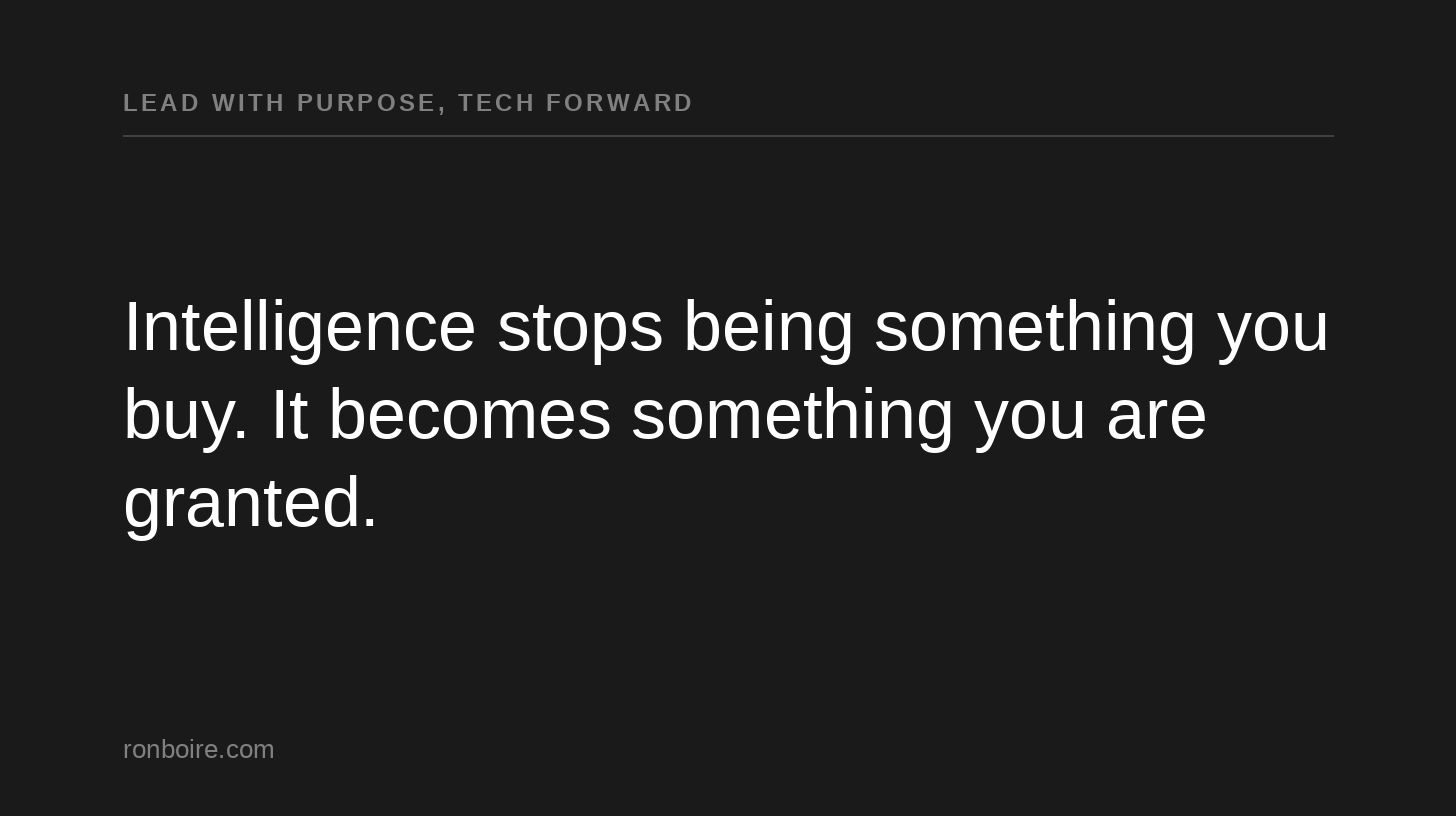
Intelligence now stops being something you buy. It becomes something you are granted.
Why tightening the grip loosens it
You would think that concentrating the best models into a hundred approved companies gives the government more control. I would suggest the opposite. You can already take an available model, wrap it in a strong enough harness, and push it past the one that was locked away. The moment access is gated, capable people figure out how to get around the gate.
China will accelerate its development of open models. More companies will be pulling intelligence in-house, where no one can switch it off.
The result of tightening the grip is a world with less central control, not more.
Another example is Argentina, where President Javier Milei pitched an opposing strategy, telling AI companies the country would stay deliberately unregulated, with a new legal category of AI-run ‘non-human corporations’ and a rock-bottom tax rate. More contries will likely follow this example.
Three questions every CEO should ask
So the question for you is not whether you will be handed a frontier model. You won’t.
First. Who in your ecosystem is on the list, or partnered with a company that is? The danger is not that you lack the best model. It is that a competitor, a supplier, or a channel partner gains a capability you cannot buy at any price, because it is granted, not sold. Alex Wissner-Gross has warned that the labs keep their strongest capability internal, so the two American frontier labs “will have internal capabilities that vastly outstrip what is available to everyone else.” So, beyond who gets access, there will also be only two companies with true state-of-the-art intelligence.
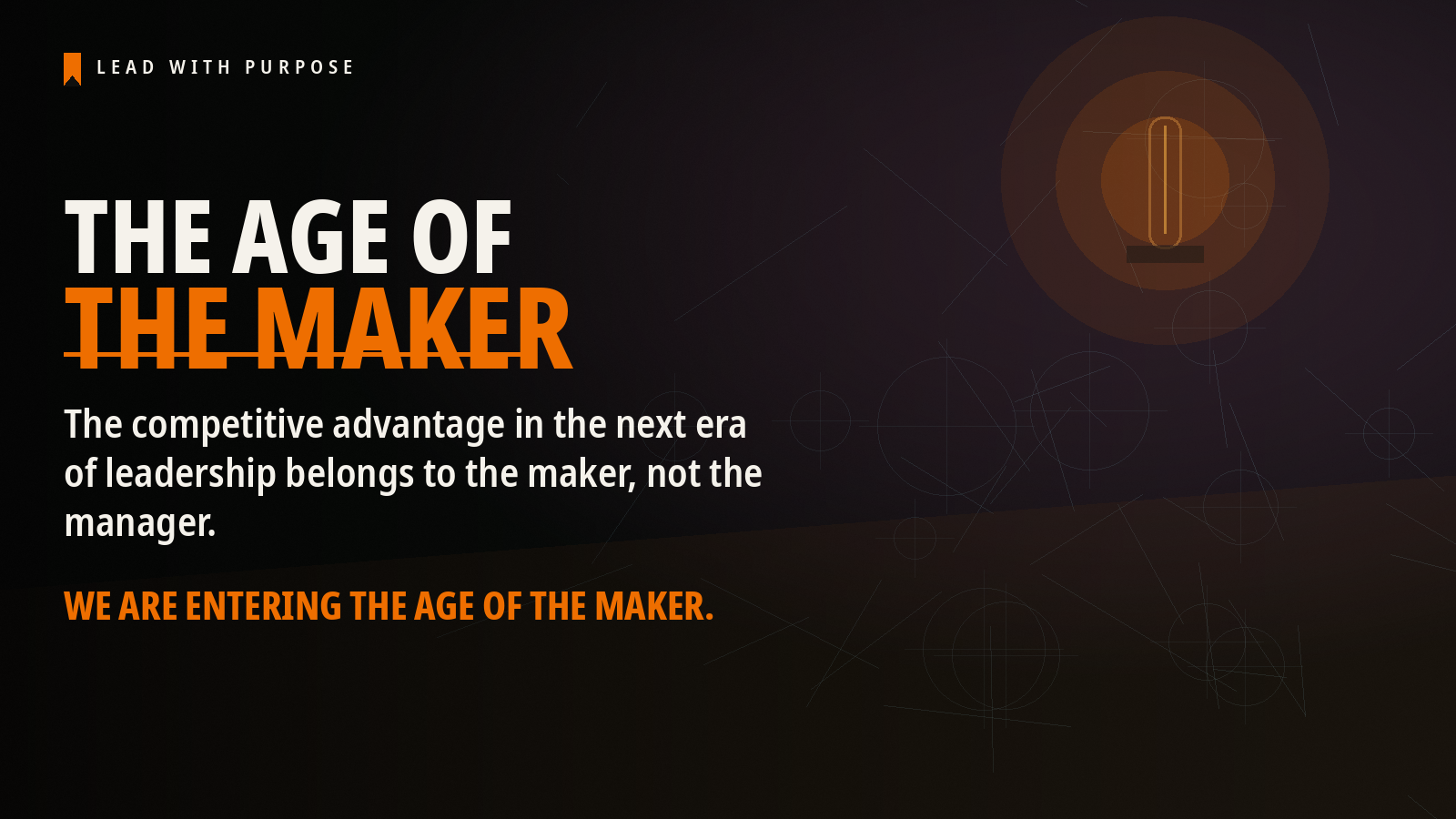
Second. If your rivals get frontier intelligence and you do not, where does your advantage come from? It has to come from the one thing a gated model cannot provide your competitor. Your knowledge of your customer. Your speed of iteration. Your people close enough to the problem to build the right thing. This is the argument I made in The Age of the Maker, now coming to life. Innovation and customer intimacy were always advantages. In this scenario, they become the only advantage you own.
Third. Do you have makers who can build with the tools you already have, or only managers who can commission a deck about them? The gated frontier is not the only frontier. A strong team wrapping available and open models in a good harness can close most of the gap. If your organization cannot build, no golden list will save you. If it can, the list matters far less.
What a Builder Should Do
First, do you understand every critical workflow in your business? Do you know what model it runs on? Then, which of those models do you control, and which do you rent on someone else’s terms? I recently had a client tell me they were in control because their open-source system ran on AWS. Really?
Now the failover test. If your frontier provider were cut off tomorrow, with no warning, what is your second source, and have you ever actually run on it? This is a very real question. When Fable 5 was running and Mythos was running briefly those models were throttled and silently downgraded in the middle of a task that, for some reason, Anthropic thought was potentially dangerous. You cannot build a company on capability that can be revoked while you sleep or in real time! If you care to read about it, here’s a link to how it was done.
Second, take an honest inventory of your makers’ tools. Which of them come from providers, and which you will have to own. Agent scaffolding that upgrades a base model is here today. One example: Emad Mostaque’s Intelligent Internet is releasing a harness that it says lifts open models above Mythos on the hardest coding benchmark. Some of your makers’ best tools will come from vendors. Some you will have to build, because you can’t assume the best ones will always be sold to you.
In the age of the maker, the tools you put in your makers’ hands are mission-critical infrastructure. Treating that as an IT line item rather than a strategic decision is potentially deadly to your business.
The connection
Concentrating intelligence into a hundred approved firms does not lock the world down. It pushes everyone else, especially you and China’s makers, to build their own. The real story is not who won a benchmark; frontier intelligence cannot be monopolized anymore. The government has requisitioned from Anthropic the decision-making authority over who gets it when. A merger between the government and a very small number of hand-selected companies, and the resulting cartel is not going to drive a good answer for your business or I fear, the U.S. All of it raises the stakes of each of us and none of it changes what you, as a leader, actually control.
You control whether you become a Builder Company. A company that equips the makers inside it and lets them build products from what they know at the edge, the knowledge no model has ingested yet or can ingest. In a world where the best models are handed to a chosen few, that edge is not a nice-to-have. It is your durable advantage, because it is the one thing that cannot be added to someone else’s allowlist.
The divide that is coming will not be between companies that have AI and companies that do not. It will be between the leaders who built on the intelligence they own, and the leaders who assumed access was durable and wake up to find themselves on the wrong side of a “golden” list.
Be a Builder,
Ron
(c) 2026, Ron Boire and The Upland Group LLC. Lead with Purpose and The 51% Rule are trademarks of Ron Boire.
Related Blogs



Take the first step toward Leading with Purpose™
Whether you need a keynote speaker, executive coach, or strategic advisor, it starts with a conversation about what you're facing and where you want to go.
Most keynotes are booked 3-6 months in advance.
Coaching and advisory engagements typically run 6-12 months and are customized to your needs.