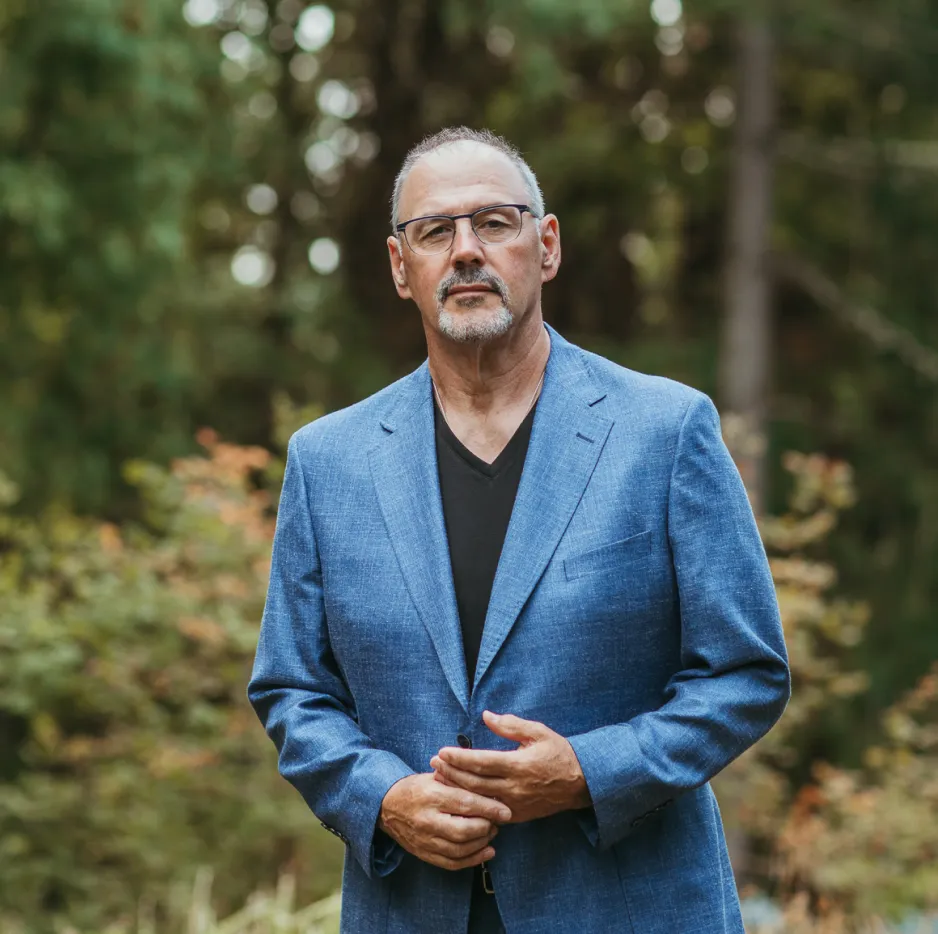
Five for the Weekend [048]

Ron Boire
Happy Friday.
This week’s five focus on personal growth, with a focus on owning your morning. I believe that owning your morning is one of the most important things you can do as a leader. Given the crazy schedules that we all have, there’s literally no other part of the day that you can control.
The best walks happen when it’s raining
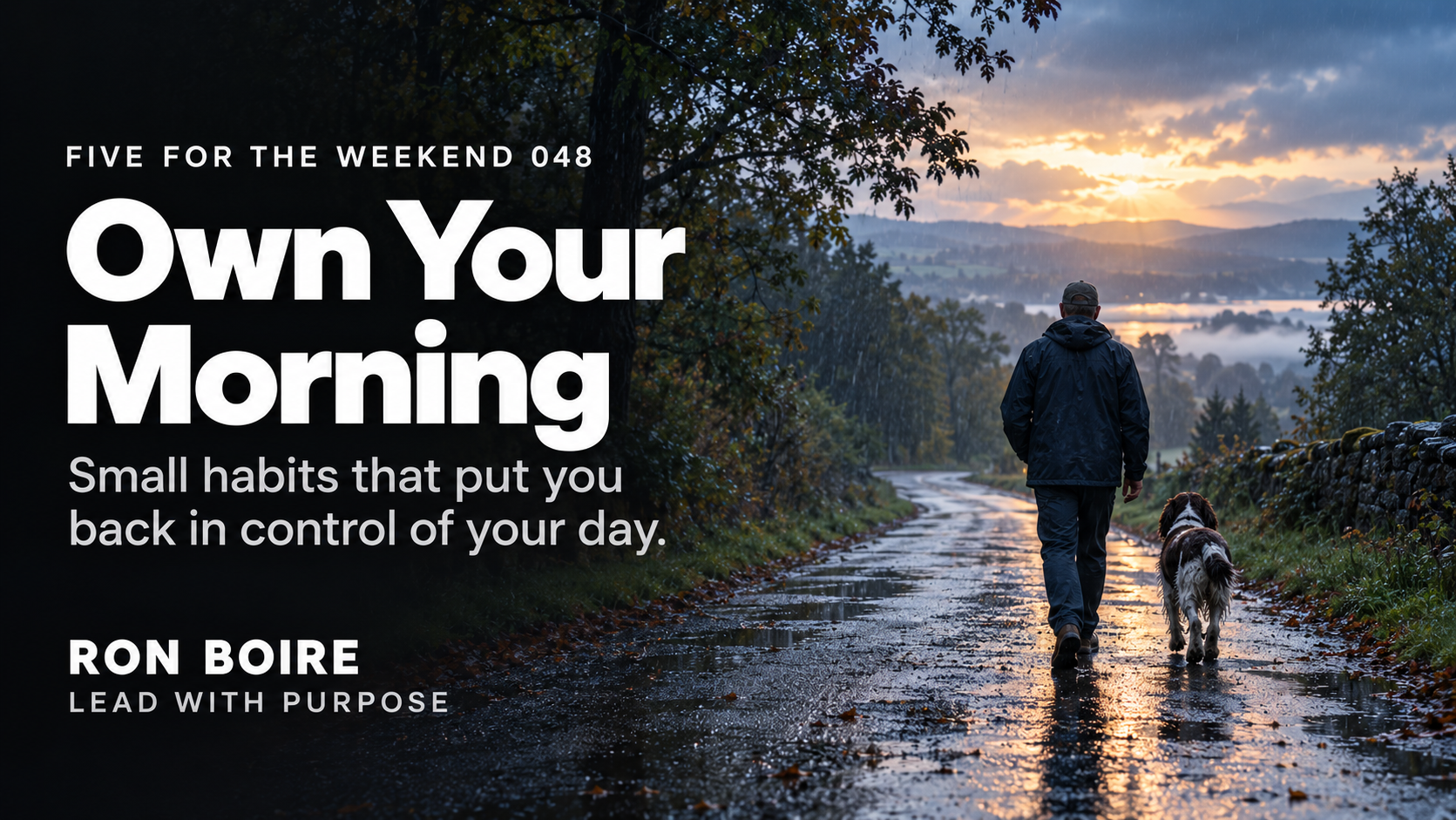
It was pouring this morning, and about 56 degrees. What a great day for a walk.
For years now, I’ve advised clients and executives that one of the most important aspects of their mental and physical health is owning the morning, and one of the most important parts of that is walking. I’ve been doing this for years, and many of my clients are doing it as well. Everyone I know who does this says their day starts better, with a more focused mind.
It’s always good to have a little science back up your advice. In a 2024 study published in Scientific Reports, researchers measured how well people recovered from mental fatigue depending on the type of break they took. Time in nature came in first. Doing nothing, second. And, surprise, scrolling social media came in dead last. So, for a real brain break: get outside, get some fresh air, go for a walk. Rain works well too.
Pay Attention
Dr. Sahar Yousef, a cognitive neuroscientist at UC Berkeley and founder of the Becoming Superhuman Lab. Dr. Yousef says that distraction, a lot of it built into the tools and toys we use every day, is the biggest killer of productivity. She talks about a few things that I’ve been saying for quite some time.
Sleep first. This one is not obvious to everyone, but it’s becoming a lot clearer as the research piles up. Dr. Yousef says everybody needs seven hours. I need about a 7.5-hour sleep to feel good the next day. Many CEOs and founders get closer to five hours of sleep. The evidence on this little sleep is becoming overwhelming. Reduced cognitive ability, brains actually reducing in size, and constant mental fatigue are common.
Your phone’s default settings are designed to distract you, to pull you into the device, not to free you. Everything about your phone is about maximizing engagement with your phone. Everything about the software on your phone, from email to social media, is about maximizing your engagement (distraction from everything else) and pulling you into the next rabbit hole. The default settings on your phone, your email, and your messaging apps are built to maximize engagement, not your productivity. A great new tip that I was not aware of is to put the phone in grayscale. I’ve turned off notifications except for my short VIP list: my wife, my children, and top clients.
Pick your MITs (most important things) every morning. This is the equivalent of my three things list. Every night, I write down the three things that I must do tomorrow. Just three. Everything else is below the line. Once I get those three done, I can go below the line and do the less important things. This is extremely difficult for most leaders to get through their heads, but focus is the absolute key to success. Take the next step that brings you closer to your goal, and don’t get distracted by things that will not. Those are your three things.
A great question to ask yourself is: “What will your future self thank you for?” The future won’t thank you for doing the little things or being distracted. The future will thank you for doing the big, important things.
Multitasking is a myth. Focus is king.
Micro habits
A great habit is one you can actually stick to. I know. Thank you, Captain Obvious.
When climbing Kilimanjaro, the guides keep repeating “pole pole,” Swahili for “slowly, slowly.” The only way to the top of Everest is a little bit closer every day. That’s what micro-habits are.
In my advisory work, the leaders that commit to big morning overhauls never make it. I had one client who was struggling to get their morning routine going, constantly committing to a big gym routine, working out five days a week. It never happened.
He was way, way, way oversubscribed to his business, and a lot of things had distracted him, and didn’t really matter. We started with something simple: walk the dog for five minutes. Believe it or not, even this took months to get started. But once it did, five minutes became 20 minutes, which became an hour of distraction-free time to think, focus, prioritize his day, and plan the next step toward his important goals.
Everyone who has ever tried to lose weight knows this. I tell people that in my lifetime, I’ve lost 500 pounds. I’m sure that number is pretty accurate.
But every time I would lose 10, I’d put on 12. Finally, by focusing on just getting a little bit better each day and a little bit better each week, I reached my goal. Reaching my goal took almost three years. It wasn’t something that happened in a day, a week, or a month, or even a year. But consistent focus on tiny micro-habits, such as owning my morning, doing my three things, and stretching five times a week for only 10 minutes, made all the difference.
Some of the best micro habits are things you take away: the phone, to start with. I always advise leaders not to look at their phone first thing in the morning. This is an extremely tough one because the phone has become an addiction. It’s their lifeline. It’s their validation that they’re needed. But really, most of what you’re doing when you wake up, laying there in bed, and start your day by looking at the phone before your feet even hit the floor, are things that can wait for an hour, or sometimes forever. How many times have you forgotten to reply to an “important” message for a day or two, and then gone back and realized it didn’t need a reply at all, and it wasn’t actually important?
I won’t even rant about social media here because it’s so obvious. Taking that away for a day, a week, or a month can be a fantastic productivity boost.
Try one of these, or make up your own, but the most important thing about habits is: trying to do the big things generally doesn’t work. Doing a lot of little things can add up to one big result.
What I’m reading
The U.S. Constitution by Melissa Murray, a professor at NYU School of Law. It’s a great overview of the U.S. Constitution. Murray discusses each article and amendment the history behind it and how it’s applied in today’s society.
Professor Murray definitely drives on the left side of the road, which is fine. I think it’s important that we all take perspective, especially today, from many different points of view. Hers is no less valid because it has a stronger political bent in one direction versus another. Ultimately, all constitutional scholars have some political bent, because all constitutional law is, by definition, political.
She also co-hosts the Strict Scrutiny podcast.
I’m pondering this
“Thinking is to humans as swimming is to cats. They can do it, but they would prefer not to.”
- Daniel Kahneman
Have a great weekend.
Ron
Related Blogs


Take the first step toward Leading with Purpose™
Whether you need a keynote speaker, executive coach, or strategic advisor, it starts with a conversation about what you're facing and where you want to go.
Most keynotes are booked 3-6 months in advance.
Coaching and advisory engagements typically run 6-12 months and are customized to your needs.